
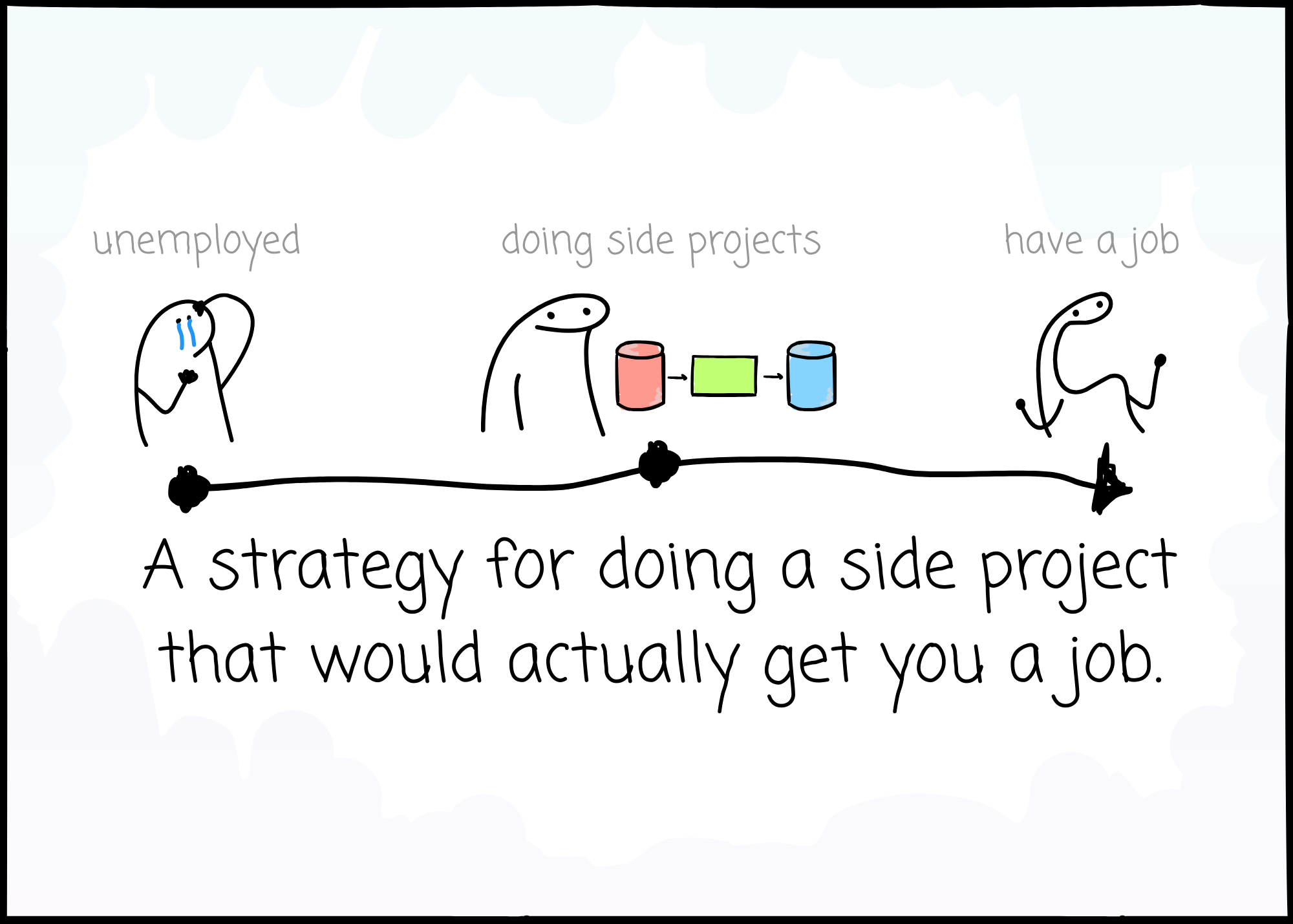
A strategy for doing a side project that would actually get you a job.
Having fun, learning skills and getting (a better) job

I invite you to join my paid membership list to read this writing and 150+ high-quality data engineering articles:
If that price isn’t affordable for you, check this DISCOUNT
If you’re a student with an education email, use this DISCOUNT
You can also claim this post for free (one post only).
Or take the 7-day trial to get a feel for what you’ll be reading.
Intro
Not long ago, a college student asked me on LinkedIn to give some feedback on his side project.
He first stores data in MySQL, uses Spark to read, transform, and load it into MinIO and Delta Lake, then uses Trino as the analytical engine and Superset for visualization.
I took a look and asked him two questions:
What (fake) business questions does he want to answer with data from this setup?
Why did he choose those tech stacks?
He couldn’t answer. He said he just searched on the internet for the popular data engineering tools and glued them together.
—
I used to be like him.
Just stick all the famous tools and call it a side project. The definitions of done are:
All stacks are up.
Some data is transformed
Some chard is displayed.
I put it into my resume. The interviewer saw it. He asked me some similar questions to the ones I asked the college student.
Of course, I couldn’t answer.
—
Doing a side project is fun.
But joy is not enough. It must be done with strategies so you can actually:
Learn things
Show what you’ve learned
This is especially important when you want to decorate your resume.
In this article, I will share my strategy to do a side project that can actually get you a (better) job.
3s TL;DR
Just imagine you’re doing a real-life data engineering project.
Do a project to solve your own problem.
First things first, start with a problem you want to solve with the data.
If it could, solve your own problem or at least ones you’re actually interested in. Because when doing that, you have the natural motivation and curiosity.

Problem-driven or business-driven is always the right approach for any data project in real life. Companies hire data engineers to help them solve real business problems with data; we store, transform, and organize it so that, at the end of the day, it can provide insights that drive business decisions.
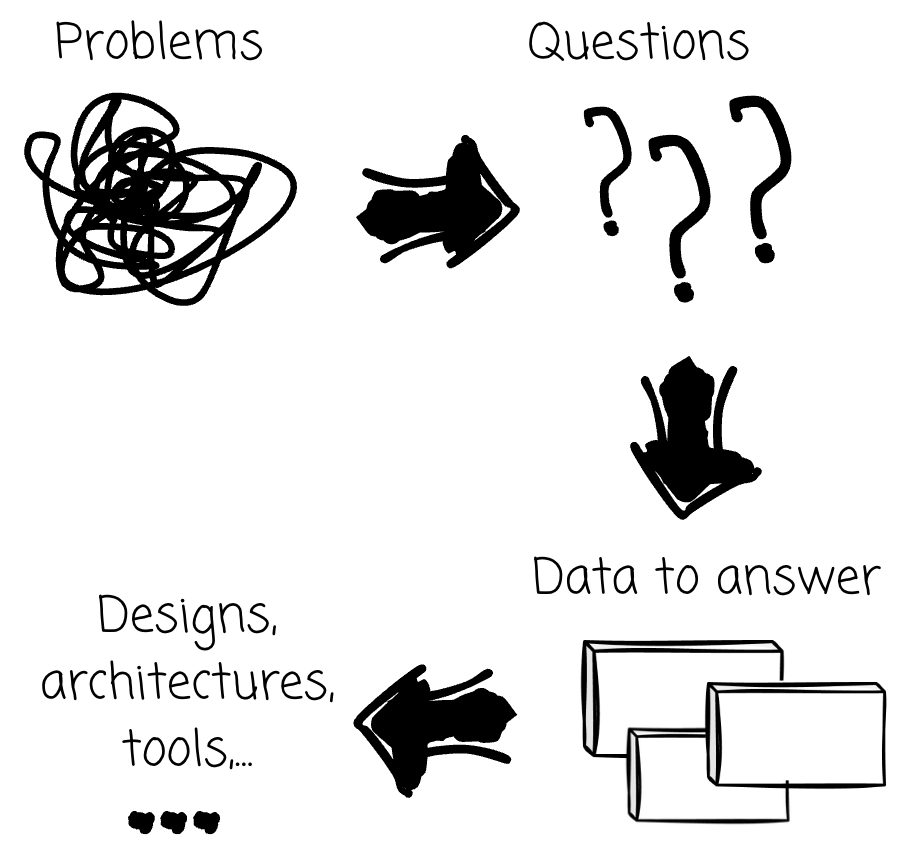
This requires us not only to have technical skills but also to understand the business domain.
Solving the problem that actually matters to you will naturally lead you to dive into understanding it, though it might require time and effort (you can leverage AI tools to assist you in this process).
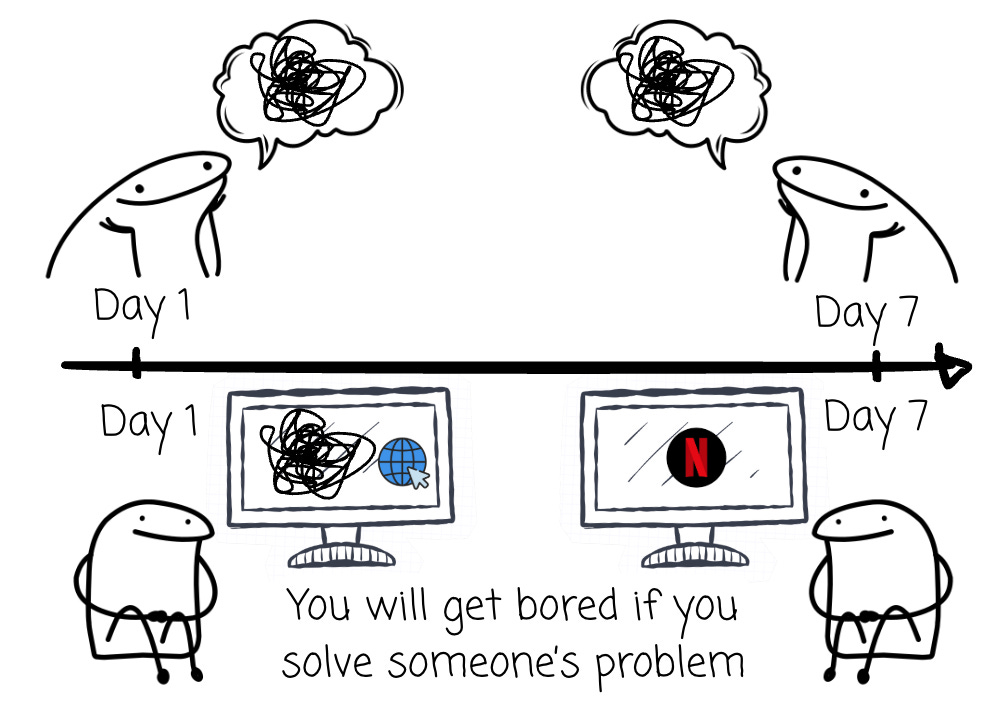
At least, you enjoy and have fun when doing that, because you know you solve a problem you care about (e.g., based on the statistics, is my favorite football player doing well?)
(You can try to solve somebody’s problem or answer random questions, for example, how many Uber rides per day in Singapore. However, you will get bored soon.)
Understanding what you’re trying to solve will define the rest of what you’re going to do for the project:
Which question do you need to be answered via data?
How do you model the data?
What is the related source data? Or is the required data available?
How fast do you want the data to be available?
…
In addition, understanding what your side project is trying to solve will make it easier to introduce what you’ve done and learned to the interviewer. They will always have a good impression of a candidate who really cares about solving problems rather than just listing tools in the project.
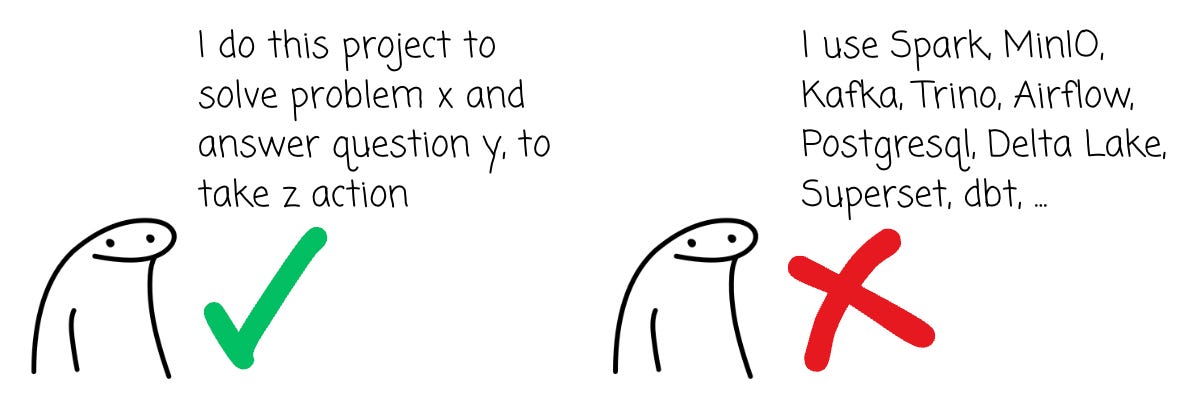
Starting a side project at this stage will put you ahead of most candidates.
I invite you to join my paid membership list to read this writing and 150+ high-quality data engineering articles:
If that price isn’t affordable for you, check this DISCOUNT
If you’re a student with an education email, use this DISCOUNT
You can also claim this post for free (one post only).
Or take the 7-day trial to get a feel for what you’ll be reading.
